09. 4. Contrasting values
DSTND Course4 Lesson1 A6 ContrastingValues
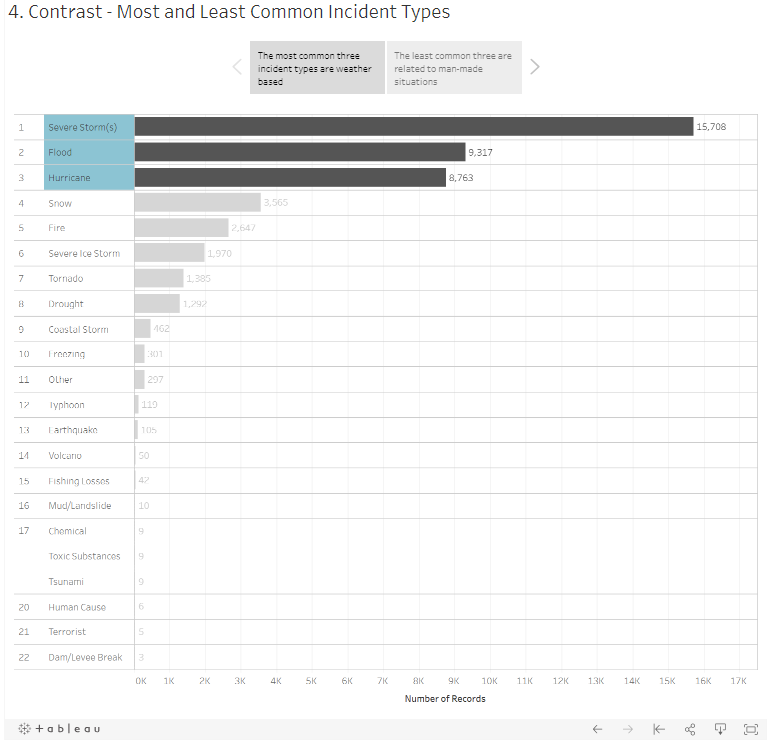
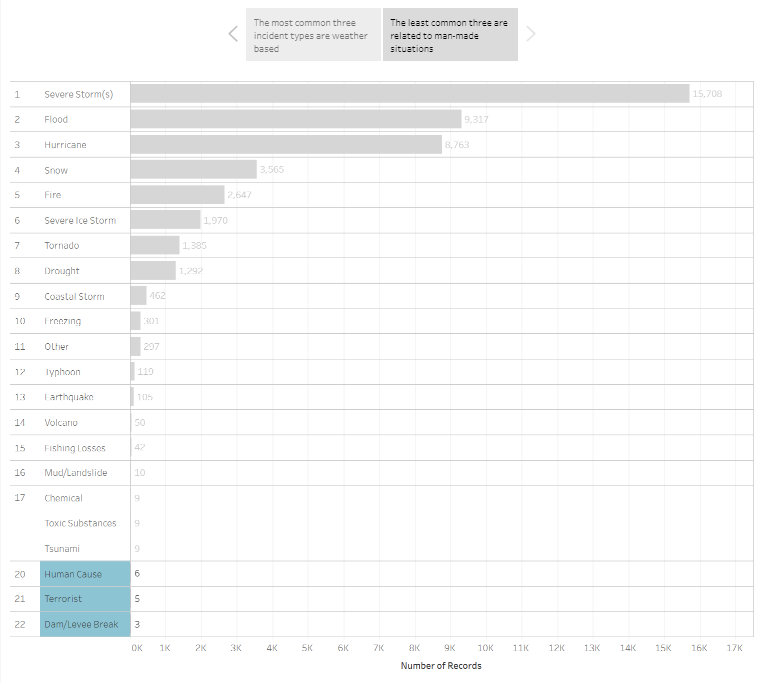
The following images show examples of Contrasting Values story type. As you can see in the image below, The contrast is brough forward with the extreme cases of the most common and least common incident types, and bringing attention to them in the way the story type is depicted.
_ Tips for Finding the Fourth Data Story Type - Contrasting Values:_
Now let’s talk about how we can find an interesting story in your data that involves contrasts.
This one is the easiest. Start with the most important measures in your data - the ones that have the biggest impact on your business, organization or community, whatever the environment.
Next, rank these measures from most to least, or highest to lowest. A simple descending or ascending bar chart will do, but you might also want to consider creating a map and filtering to the most extreme values on both ends - high and low. Consider ranking individual records themselves, such as sales transactions, or you might want to aggregate them into important or meaningful categories, like product categories.
Now, ask yourself what each of the items at the top and bottom of the rank ordered list have in common. Maybe all of the most profitable customers are in a certain industry, while the least profitable ones are in another. Or maybe all of the high crime areas are in a certain spot on the map, while the low crime areas are more scattered.
If there’s a compelling narrative there, you might want to choose Contrasts as your dominant story type.
Quiz
Quiz #1